
MIT Just Described the High School Bennett Day Already Built
By Heidi Hutchison, Head of School at Bennett Day School
In August, a committee of MIT faculty, students, and staff released the results of a five-month study on how artificial intelligence is reshaping teaching, learning, and research at one of the world’s most technologically sophisticated institutions. If any school had reason to embrace AI as a full replacement for how students learn, it would be MIT. The report itself opens by calling MIT “an institution deeply identified with the birth of AI,” home to many of the researchers who built the technology in the first place.
Instead, the report reads as an urgent case for the opposite: project-based work, discussion-based classes, real mentorship, and assessment that measures what a student can actually do rather than the grade they can produce.
Reading it, I kept having the same reaction. This is not a new idea MIT is discovering. This is the design Bennett Day School has been built around from the start, and it is exactly what our Upper School offers students as they head into a world where AI can write the essay, solve the problem set, and generate the slide deck in seconds.
The Problem MIT Is Naming
The committee’s core worry is not that AI exists. It is that AI makes it easier than ever for students to bypass the very struggle that produces learning, and for schools to let that happen quietly, one assignment at a time. Their report describes students turning to AI instead of to classmates, teaching assistants, or professors, and instructors feeling forced to police AI use in ways that damage trust rather than build it. The committee’s answer is not more surveillance or more detection software. It is to redesign the learning experience itself so that the things AI can fake, like a completed worksheet, matter less, and the things AI cannot fake, like judgment, collaboration, and the ability to work through a hard problem alongside other people, matter more.
That is a genuinely bold thing for MIT to say. It is also, almost word-for-word, the case we make for why Bennett exists.

Project-Based, Discussion-Based, Built for People in the Room Together
One of the report’s central recommendations is that every class needs a real, structured, in-person social component: group projects with real deliverables, problem-solving sessions where students work through ideas out loud, discussions where participation actually counts. The committee is asking MIT to intentionally build the kind of collaborative, hands-on classroom experience that doesn’t happen by accident.
At Bennett, that is not a retrofit. It is the starting point. Our classes are intentionally built so that discussion-based problem-solving is possible in the first place. Our curriculum is project-based because we think students learn by doing real work together, not by absorbing content and reproducing it. We designed our physical spaces for collaboration because we believe learning happens between people, not just inside one person’s head. MIT is now recommending that instructors build these conditions into their courses one at a time. We built the whole school around them.
Mentorship and Apprenticeship, Not Just Instruction
The report spends real time on MIT’s Undergraduate Research Opportunities Program, UROP, which pairs undergraduates with faculty-led research. The committee argues that UROP works not because it produces useful labor for professors, but because it inducts students into a real community of practice: they learn how questions are formed, how judgment develops, and how credit and disagreement are handled among people who are actually doing the work. The committee fears AI could quietly replace those apprenticeship relationships with something more efficient and far less educational.
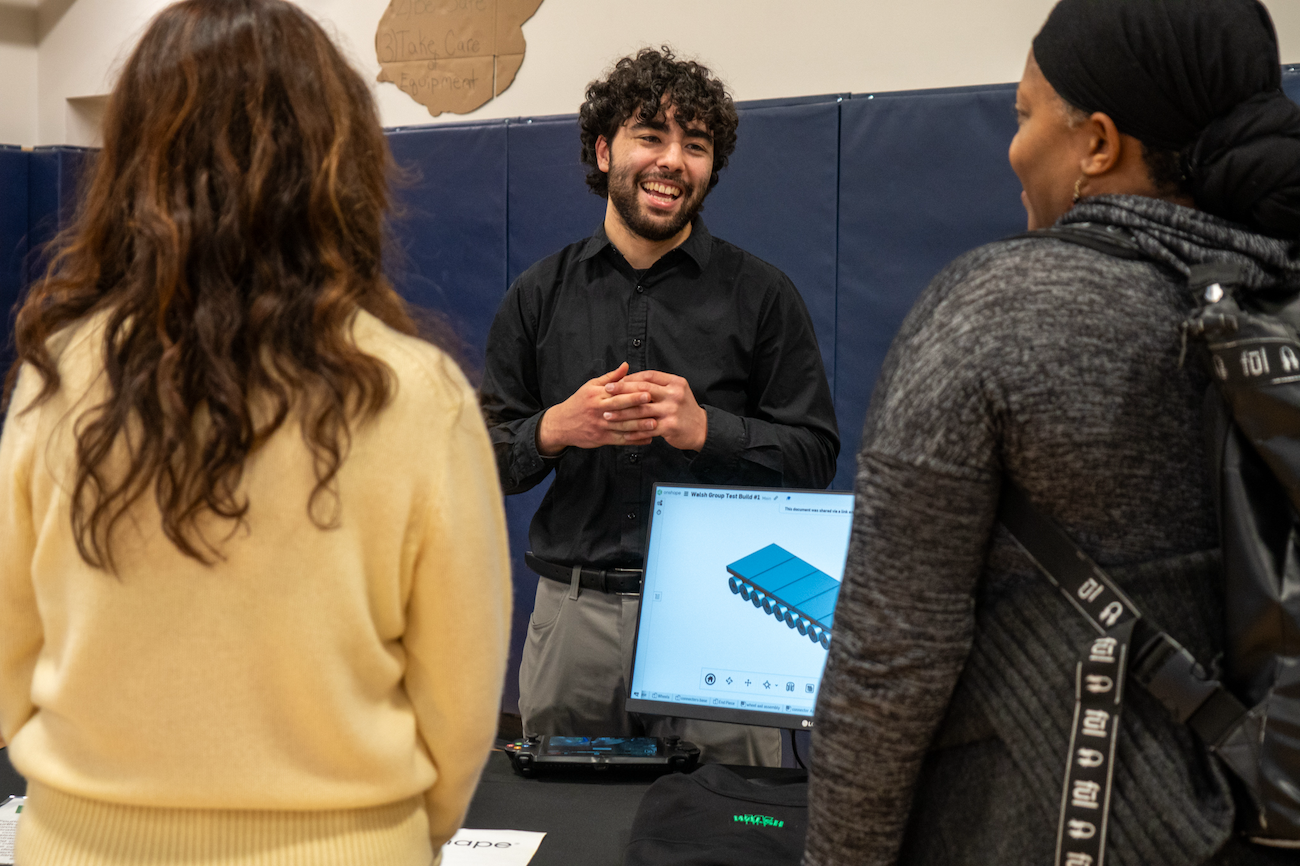
Bennett Day’s Upper School internship program exists for exactly this reason. It is designed so that every junior and senior spends a full trimester with afternoons on-site at a host organization and mornings in an internship seminar back at school, reflecting on and making sense of that real-world experience. Students are not just observing. They contribute to real work, are mentored by adults who are not their teachers, and discover what it feels like to be taken seriously in a professional setting before they ever set foot on a college campus. It is our version of what MIT is asking its faculty to protect and expand: learning that happens through relationship and real stakes, not simulation.
Measuring What Students Can Actually Do
MIT’s report also takes on grading directly, questioning whether grades still signal what they once did, given that AI can produce polished work on demand. The committee points to competency- and mastery-based assessment and portfolios of real work as better ways to show what a student has actually learned.
This is one of the values built into how we teach at Bennett. Academic excellence here is measured by depth rather than by a transcript of scores. Every Bennett Upper School student graduates with a Mastery Transcript, a modern record of learning, now accepted by nearly 600 colleges, that gives admissions officers a detailed, evidence-based picture of what a student can actually do, along with a genuine portfolio of project work built over the course of the year. When a family visits our Upper School, we don’t ask them to trust a GPA. We can show them what their student made, built, argued, or solved, along with the thinking behind it.
This isn’t just our own instinct about what works. Challenge Success, the research center based at Stanford’s Graduate School of Education, has spent two decades studying what actually predicts student well-being and success beyond high school, and its research consistently points away from rankings and grade-chasing, and toward the things a project-based, relationship-driven model provides: authentic engagement, a sense of belonging, and real fit between a student and their school. Challenge Success has recognized Bennett as an exemplar school community, with student well-being, connectedness, and sense of purpose in the top 1% of the schools it surveys nationwide. It’s the same instinct behind MIT’s own call to track real data on how students are actually doing, rather than assume the old signals still mean what they used to.
Humanity First
Underneath all of MIT’s specific recommendations sits a section the committee titles ‘Put humanity front and center.’ Their argument is that a school’s job is not to optimize content delivery. It is to help students become people who can think critically, exercise judgment, collaborate with others, and understand the consequences of their choices in a world they share with billions of other people.
That is close to a restatement of our own mission: to cultivate a culture of collaboration that nurtures children’s innate sense of inquiry and curiosity, advancing creativity, innovation, and the development of lifelong learners and leaders. We did not write that mission in response to AI. But it turns out to be exactly the kind of school MIT is now telling its faculty it needs to build. At Bennett, we grow our students’ human advantages— curiosity, analysis, character, collaboration, creativity, and the capacity to learn. We designed and built our school program, from age two through 12th grade, for what’s next and to match rigor with humanity.

What This Means If You’re Touring High Schools Right Now
If you are evaluating high schools for your child today, you are choosing a model of learning for the exact moment MIT is describing, one in which AI can do an enormous amount of the work a student used to have to do alone, and the schools that matter most will be the ones that give students something AI cannot: real collaboration, real mentors, real projects with real consequences, and a way to show what they actually know.
We did not design Bennett’s Upper School in response to a report that did not yet exist. But we are glad, reading it now, to see how closely the two line up.
See the Difference in Person
Don’t just take our word for it—or MIT’s. Visit our West Loop campus and let us show you what modern, future-ready education looks like in action.
Sources
Report of MIT’s Ad Hoc Committee on AI Use in Teaching, Learning, and Research Training, August 2026. https://aiandeducation.mit.edu/report/
Challenge Success, Stanford Graduate School of Education, K-12 Education Research. https://www.challengesuccess.org/education-research/
Bennett Day School, Mission and Vision. https://bennettday.org/about/mission-and-vision/
*A note on how this was written: I used AI to help research and draft this piece, then reviewed and finalized it myself, in keeping with the same disclosure norm this report recommends for MIT’s own instructors.