Learning by Doing
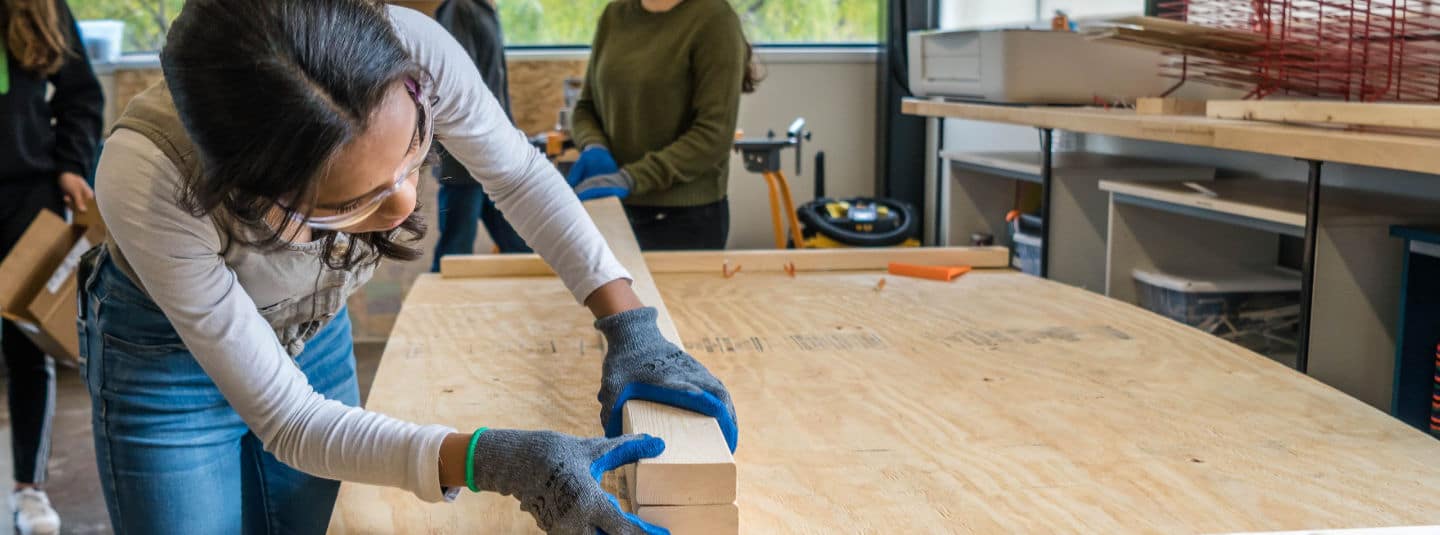
Your child won’t memorize their way through Bennett. They’ll build something that matters.
Most schools teach subjects in isolation and test recall. Your child covers the material, passes the exam, and forgets most of it by summer.
Bennett is built differently. Here, students spend months on a single cross-disciplinary project — one that starts with a topic or theme they care about. Along the way, they research, collaborate, iterate, and present their work to an audience that isn’t just their teacher. The result is learning that sticks because it connects to something real.
This isn’t an elective or a Friday afternoon activity. It’s the core of how Bennett students learn at every level — from Early Childhood through 12th grade. And it’s why graduates leave with the skills — critical thinking, communication, collaboration, creative problem-solving — that traditional transcripts can’t capture and that colleges and employers increasingly demand.
What This Looks Like, Grade by Grade
Early Childhood (PreK–SK)
Projects emerge from children’s natural curiosity. A fascination with bugs becomes a weeks-long investigation — observing, drawing, hypothesizing, building. Teachers document each child’s thinking in real time, making growth visible to families.
Lower School (1st–4th Grade)
Projects grow in scope and structure. Students learn to plan, research across sources, and present findings. A unit on local ecosystems might produce field guides, data visualizations, and public presentations to community scientists.
Middle School (5th–8th Grade)
Projects balance student inquiry with competency coverage. Students take on multi-week challenges — designing solutions to real community problems, building prototypes, defending their reasoning. They learn to manage complexity, deadlines, and teammates.
Upper School (9th–12th Grade)
Students spend half of every school day in a trimester-long project course. Recent projects have included designing nonprofit models for migrant health kits, mapping refugee migration routes, and analyzing the structural forces that shaped Chicago’s neighborhoods. Every trimester ends with a public Demo Night and a Presentation of Learning.
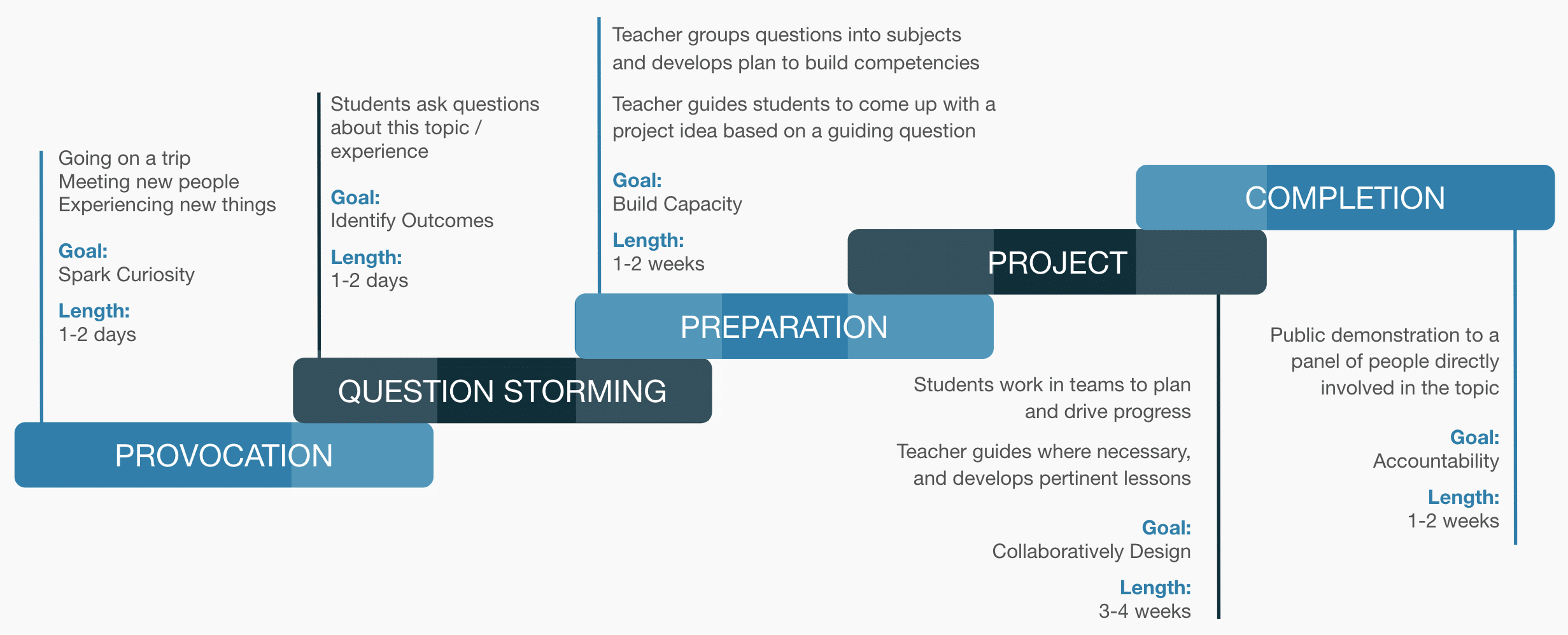
Every project follows the same arc — from initial provocation to public presentation.
What Your Child Gains
Evidence, Not Grades
Your child builds a modern record of learning — presentations, prototypes, published research — not just a row of letter grades.

Skills That Cross Boundaries
Projects integrate science, writing, math, and design — because real problems don’t come sorted by subject.
A Wider World View
Projects connect to real communities and real stakes. Students learn to listen across difference, consider impact, and act with care.
Ownership of Their Learning
Your child helps shape what they study and how they show what they know. That agency builds motivation, confidence, and self-direction.